Cabinet color decisions
Repainting Honey Oak Kitchen Cabinets: Warm White vs Sage Green
By KitchenRedesign AI · Remodeling finish & layout comparisons
Published · Updated
Homeowners with dated 1990s golden or amber honey oak cabinets almost always pause at the same fork in the road: play it timeless with Warm White, or introduce gentle character with Muted Sage Green. Both lift heavy orange wood tones immediately, yet they behave very differently once your existing flooring, granite, and window light stay in the room.
Testing both directions on a photo of your real kitchen answers half the debate in seconds—especially before you spend money on cabinet door painters or gallons of primer.
What changes in a Warm-White Shaker reset?
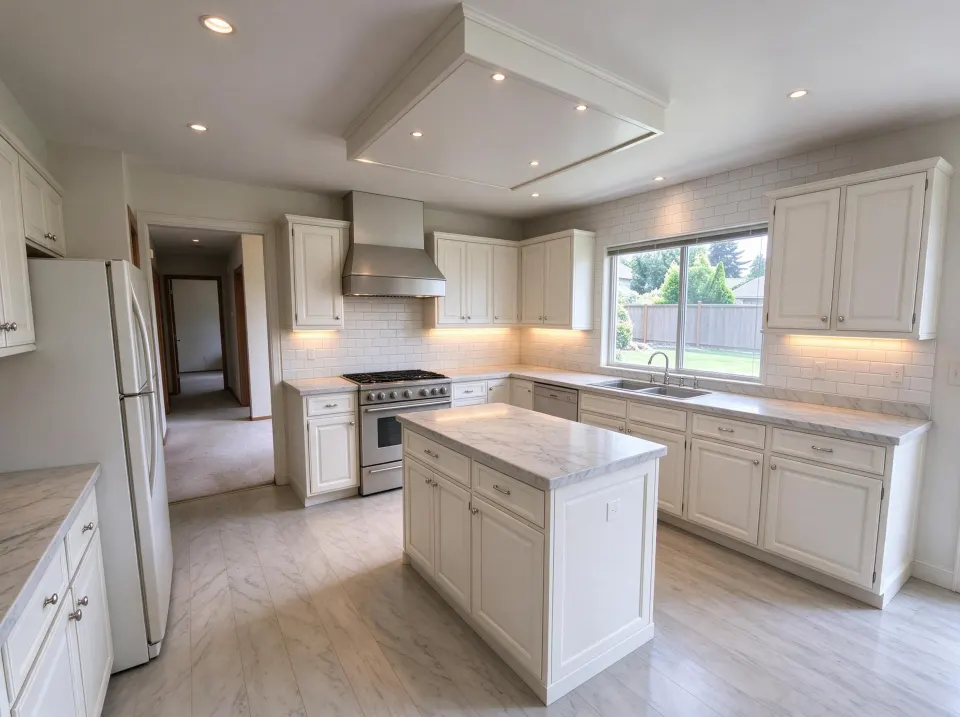
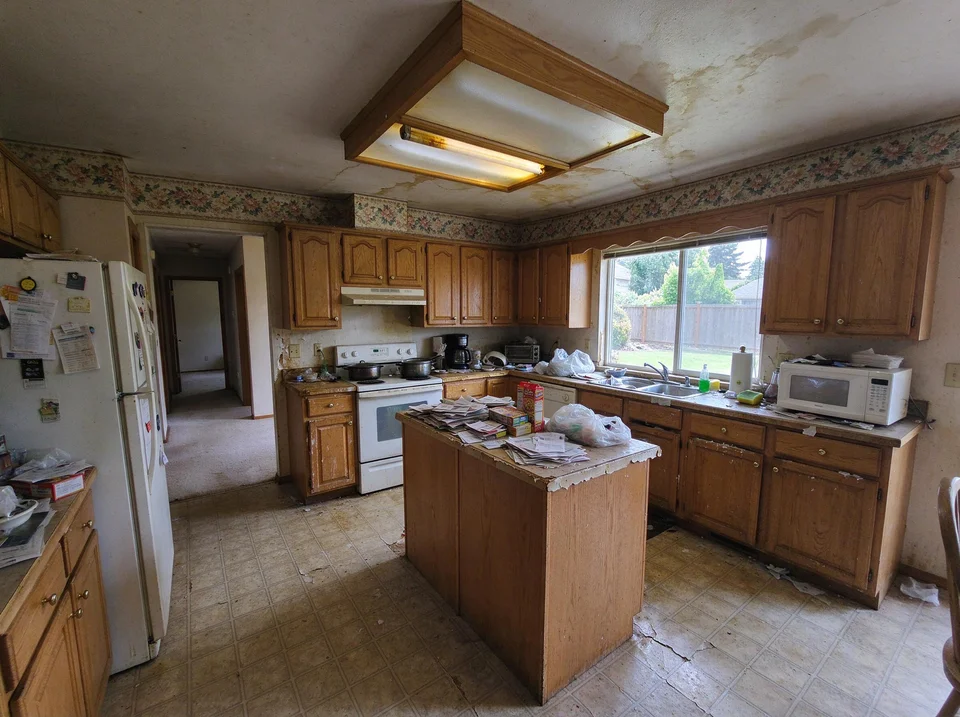
Dated wood kitchen → Classic Warm-White Shaker concept
Warm off-white Shaker doors, light veined quartz, and bright subway tile lift heavy amber wood tones while keeping window and sink walls in place.
AI concept illustration on a reference dated oak kitchen · Verify exact dimensions and paint swatches physically · 2026-11-18
Now test this look on your own kitchen
Start with a clear daytime photo of your cabinets and counters.
Switching from amber oak to soft off-white bounces light into deep back corners and instantly expands visual height. Notice that the best warm whites lean creamy rather than icy blue-white—stark blue-white paint often makes existing beige tile floors or warm wood dining furniture look yellowed by comparison.
If you plan to sell within two to five years, Classic White Shaker remains the broadest neutral baseline.
What changes with Muted Sage Green cabinetry?
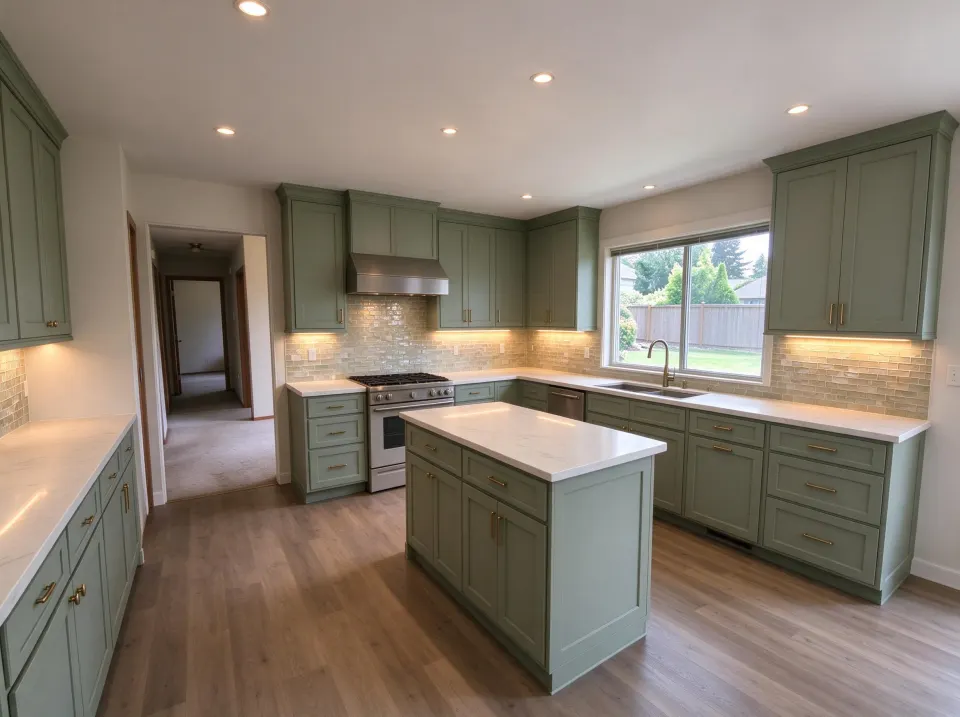
Dated wood kitchen → Muted Sage Green & Brass concept
Muted sage green Shaker cabinetry adds calm color without making the upper walls feel closed in, paired with warm brushed brass hardware.
AI concept illustration on a reference dated oak kitchen · Verify exact dimensions and paint swatches physically · 2026-11-18
Sage green adds organic warmth and personality without plunging the room into darkness the way charcoal or deep navy can. Paired with brushed brass hardware, Sage Green Shaker flatters warm white oak floors, brass light fixtures, and terracotta or cream stone tiles particularly well.
Warm White vs Sage Green: how to choose from your own photo
| Decision Check | Warm White | Muted Sage Green |
|---|---|---|
| North-facing or windowless kitchen | Reflects the most available light | Keep to lowers or add stronger under-cabinet LEDs |
| Busy speckled brown or gold granite | Choose creamy off-white matching the lightest fleck | Works well if green-grey flecks or warm cream exist |
| Future resale neutrality | Broadest appeal across buyers | Popular transitional look with subtle color |
| Everyday scuff & grease visibility | Shows dark scuffs near trash pull-outs | Hides subtle daily hand marks slightly better |
Two physical checks a screen preview cannot replace
- Wood grain texture: Real red oak has deep open pores. An AI preview smooths doors into painted lacquer, whereas real-world painting leaves subtle vertical grain ribs unless your painter applies grain filler and high-build primer.
- Vertical light testing: Never judge a cream white or sage undertone from a phone display alone. Order large sample boards and stand them upright near your sink and refrigerator at 10 a.m. and 8 p.m.
Upload a straight-on daytime snapshot on KitchenRedesign AI, switch Kitchen Zone to Cabinets only if you are keeping your stone, and save both concepts side-by-side in My designs. For photo framing tips, check the kitchen photo guide.
Further planning reading
- NKBA: Kitchen Design & Remodeling GuidelinesIndustry layout and surface planning standards.