Cabinet color decisions
Two-Tone vs Single-Color Kitchen Cabinets: Keep Uppers Light or Go Bold?
By KitchenRedesign AI · Remodeling finish & layout comparisons
Published · Updated
Two-tone kitchens have shifted from a passing trend to a practical problem-solver: light upper cabinets keep low ceilings airy and reflect ceiling light, while darker lower doors ground the floor line and hide toddler handprints, pet scratches, and dishwater drips.
Still, splitting upper and lower colors isn't automatically better in every layout. Seeing both versions side-by-side on your own cabinetry tells you immediately whether a color horizon cuts your kitchen in half awkwardly or opens it up.
When Two-Tone opens up the room
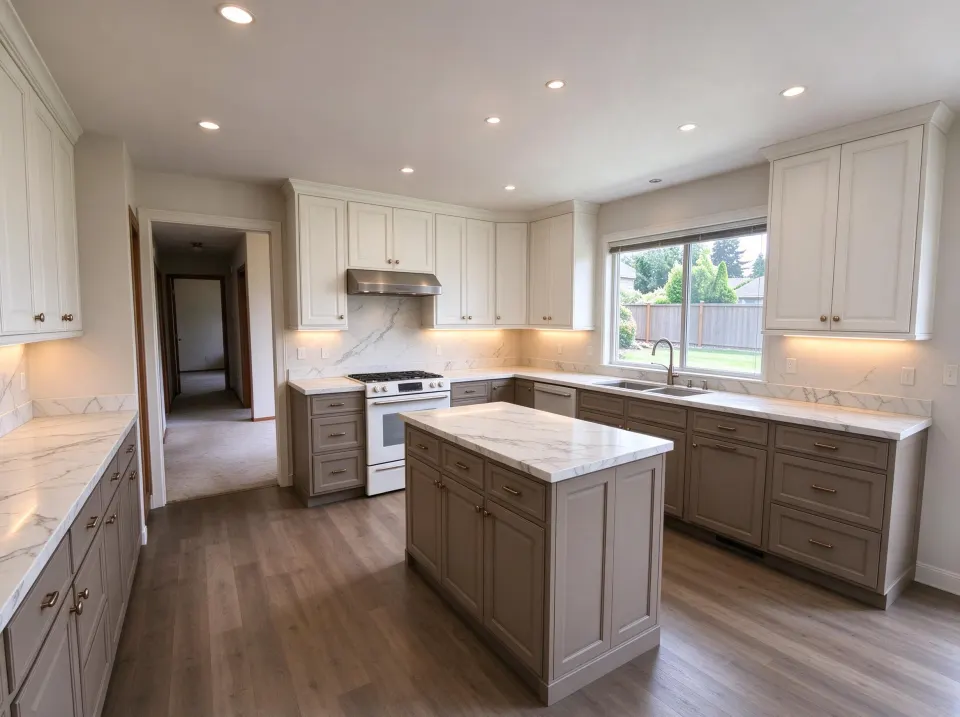
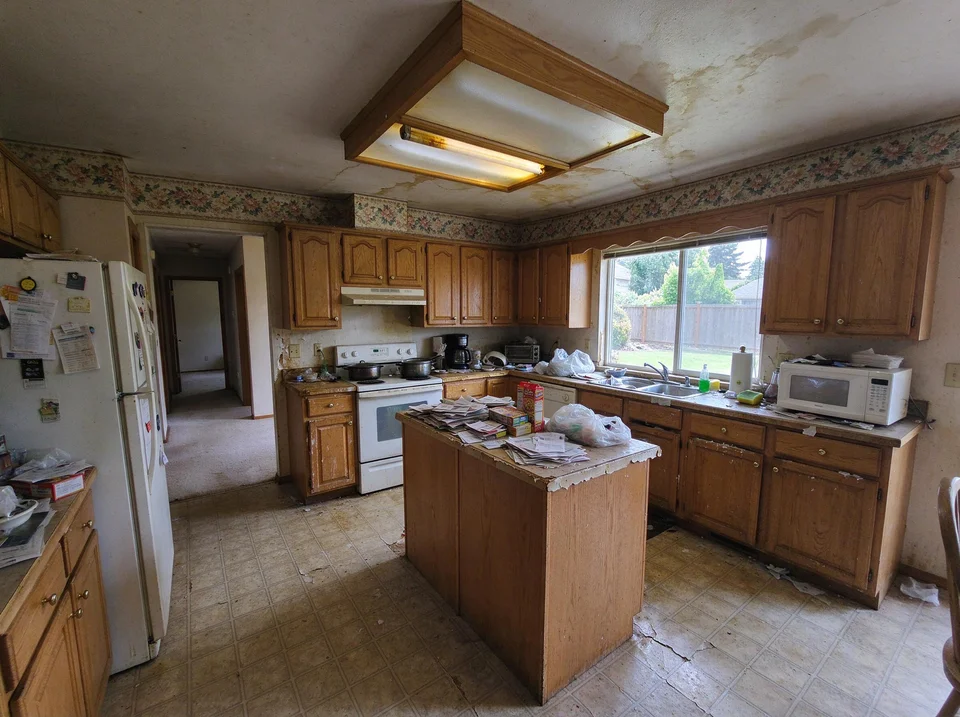
Two-tone balance: crisp white uppers with deeper greige lowers
Light upper doors blend cleanly toward the ceiling while grounded greige base cabinets hide lower wear and anchor the center.
AI concept illustration on a reference dated oak kitchen · Verify exact dimensions and paint swatches physically · 2026-11-18
Now test this look on your own kitchen
Start with a clear daytime photo of your cabinets and counters.
In Two-Tone Cabinets, pale uppers fade quietly into light drywall so your eyes read more ceiling space, while greige, taupe, or muted olive base cabinets anchor the room.
This split shines when: - Your ceilings are 8 feet or under and heavy dark uppers make you feel boxed in. - You have a crowded U-shaped or galley layout where continuous color on both walls feels repetitive. - You want deeper color (greige, forest green, navy) without darkening eye-level space.
When single-color cabinetry looks cleaner
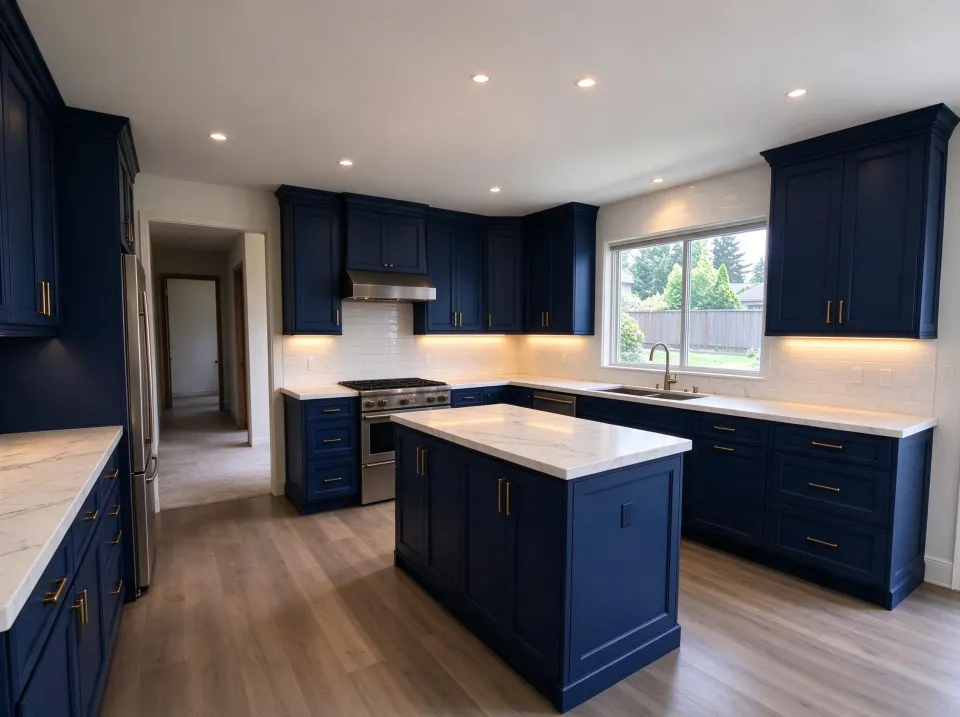
Full saturated color: deep navy Shaker cabinetry with warm brass
Full-height navy increases contrast dramatically; inspect shaded wall corners and ceiling junctions carefully against your own window light.
AI concept illustration on a reference dated oak kitchen · Verify exact dimensions and paint swatches physically · 2026-11-18
Single-color designs like Navy & Brass or Classic White Shaker read calm and tailored when the kitchen already has tall windows, open shelving breaks, or strong architectural symmetry. In very small one-wall kitchens, switching cabinet colors halfway up a narrow strip can sometimes look pieced together rather than intentional.
Solving the tall pantry tower dilemma
| Feature in Your Photo | Usual Two-Tone Rule | What to Watch in the Preview |
|---|---|---|
| Full-height refrigerator panel | Match the darker base tone—or match light uppers in tight rooms | Avoid leaving one dark box stranded on a bright wall |
| Island facing a living room | Paint island only in the accent color; keep perimeter single-color | Compare Island only vs full two-tone first |
| Built-in pantry wall | Choose one tone across the tall bank rather than splitting mid-height | Check sightlines from the doorway |
Test both Full kitchen in Two-Tone Cabinets and an Island only accent pass on the homepage workbench before locking paint quantities.
Further planning reading
- NKBA: Kitchen Color & Proportion BasicsGuidance on upper-lower sightlines and contrast balance.